Thursday, December 07, 2006

Lack of green spaces put kids off waking


'Stranger danger' threat and lack of green spaces put kids off walking

Beulah Road now and 1925!

Relationship between walking levels and perceptions of the local neighborhood environment

Perceived 'stranger danger' and lack of green spaces put off children from walking more, suggests research published ahead of print in the Archives of Disease in Childhood.

The research team surveyed six primary schools in Birmingham, UK, located in a cross section of areas in and around the city.

In all, the responses of 473 children between the ages of 9 and 11 were collected on the grounds that lifelong patterns of physical activity are established at around this age.

The survey covered questions about how often the child had walked in the previous week, their perceptions of the local environment, and their individual preferences for modes of travel. A smaller group of parents (191) responded to questions about car ownership and family matters, including ethnicity.

Children who made more than the average 20 trips by foot in the previous week were classified as ‘high’ walkers, and comprised just over 40% of the sample

Those who walked less than this were classified as ‘low’ walkers and comprised well over half of the sample (58%).

There was no difference between the sexes, but higher numbers of children of black and minority ethnicities were classified as ‘low’ walkers. Those whose families owned at least one car also tended to walk less.

Only a third of children felt that heavy traffic made the local roads dangerous. Furthermore, this view did not deter children from walking.

More of those who were classified as high walkers perceived the neighbourhood to be full of traffic.

Almost two thirds of children and over three quarters of parents expressed anxiety about ‘stranger danger.’

And children classified as low walkers were more likely to worry about strangers when out alone, to claim that there were insufficient local parks and sports grounds, and to prefer travelling by bus or car.

"Our findings suggest that perceptions of the local environment are related to walking levels in children," conclude the authors, adding that walking is a convenient way of boosting exercise levels and tackling the rising tide of childhood obesity.

Contact: Emma Dickinson edickinson@bmj.com
44-020-738-36529
BMJ Specialty Journals

Public release date: 6-Dec-2006

Radical transport planning puts the pedestrian first!

What a mess in Cardiff City centre!!

I urge you to consider the York hierarchy adopted radical transport planning - see below – or try Hull! How can they find the cash? I hope the increased parking charges will be spent on better crossing facilities and footpaths!
Getting your local council to put walking first
  • Adopt a priority road user order. York City Council did, and they prioritised it like this:


1. Pedestrians

2. People with disabilities
3. Cyclists
4. Public transport users
5. Commercial and business vechicles
6. Car borne shoppers
7. Coaches, car commuters and visitors

How much is the council here spending on roads and related repairs and railings as compared to traffic calming pedestrian crossing etc. How much have the council received from planning gain in this neighbourhood?

Perhaps it would be useful to audit what the council has promised and what it said it would do!

Please have a look at City of York Local Transport Plan 2006-2011Annex B Walking Strategy

City of York Local Transport Plan Cycling Strategy 2006-2011 Annex C

Compare this with Cardiff’s walking stategy.

Perhaps you could look at this and decide if this policy is working. In particular note that policies to improve things does not always require funding e.g.

A37 To ensure high priority is given to ensuring appropriate facilities for walking are an integral part of development proposals.

On-going No specific funding required

Decriminalisation which was promised and will move responsibility for parking offences to the council will improve revenue to the council to fund the necessary improvements. Have you any idea when this is going to happen?

Crossing Facilities

Virtually all signalised crossings in York are now disabled-compliant, in line with the Disability Discrimination Act recommendations. To achieve this they have been fitted with audible warning devices, rotating cones and dropped kerbs with coloured tactile paving.

What progress have we seen in Cardiff? How many crossing remain to be converted?

Making crossings comply with legislation in York

Around 8% of car journeys in Wales are less than 1 mile, 26% are less than 2 miles and 58% are less than 5 miles2. While there will always be some short trips for which a car is the most convenient choice (carrying heavy shopping for example), many of these short journeys could be done on bicycle or by foot.

W15 The Council will endeavour to provide and improve crossing facilities, including the number and location of crossings and wait times at junctions wherever a need is identified, in order to achieve the most direct routes for pedestrians.

In Cardiff more often crossroads have only crossings on 2 or 3 sides!

Wood street is an example of how railings make it more dangerous for pedestrians as that encourages traffic to go faster and the fact that the crossings here are in the wrong place has led to the deaths of a number of people!

Recently on the Caerphilly Crossroads a campaign stopped traffic lights being installed and others put in totally the wrong place. If we had the MOST DIRECT ROUTE for pedestrians we would a crossing at the end of the street!

Rhiwbina needs a pedestrian crossing at the Spar end of the village.


W16 The Council will provide dropped kerbs and associated tactile paving at all new footway crossing points, and as part of programmed improvement schemes at existing road crossings.

W17 The Council will take into account the needs of disabled persons with the use of and adherence to the Department for Transport’s Inclusive Mobility Document as
good practice.

Whar progress has been made and how far have we to go to achieve this?

4.4.6 People can be put off walking if access is blocked by illegally parked vehicles.

W18 The Council is considering improvements to parking enforcement through a process known as decriminalisation. This means responsibility for enforcement will transfer from the Police to the Council.

Flooding of roads and footpaths dissuades people from walking. The Welsh Assembly Government in their Walking and Cycling Strategy for Wales (December 2003) suggest a programme of street audits to address the quality of the urban realm in major towns and cities, to improve the quality of public space and to remove obstacles and provide clear, legible and safe routes for pedestrians and cyclists.

(This could be simply organised.)

4.5.3 In addition to maintenance, attention will need to be given to improve the attractiveness of all highways used by pedestrians.

W21 The Council will endeavour to provide increased numbers of seats, shelters, signs, information points, toilet facilities and lighting, where appropriate.

W22 The Council will also seek to reduce street furniture clutter by amalgamation of signs, removal of poles etc.where appropriate in order to improve the quality of pedestrian routes.

4.5.4 Where new highway schemes or improvements to existing

highway infrastructure are proposed, the needs of pedestrians should be considered first, to ensure that appropriate facilities, where necessary, can be provided.

W23 The Council will produce a set of good practice guidelines for walking for those designing and implementing highway and traffic management schemes or involved in transport planning.

A31 Reduce street furniture clutter by amalgamation of signs, removal of poles etc. where appropriate in order to improve the quality of pedestrian routes. On-going Local Authority funding W22

Way to go!!!

A32 Good practice guidelines

A37 To ensure high priority is given to ensuring appropriate facilities for walking are an integral part of development proposals.

On-going No specific funding required

Councillor Adrian Robson and Jayne Cowan reply

Jayne and I are sorry you couldn’t make our surgery on Monday, so here are a few points in answer to your questions.

Heol Llanishen Fach:

With the Heol Llanishen Fach Road Narrowing (HLF), the overwhelming majority want it removed and something else in its place. In my opinion it is one of the most dangerous traffic calming measures in Cardiff – however there must be something to replace it. The replacement option we are supporting is traffic lights. This would have the advantage that everyone would have their “turn”. Therefore traffic going East-West along HLF would be one phase, traffic going North-South along Heol Uchaf & Blaen-y-Coed would be another (although I expect the majority of traffic will be turning left or right out of Heol Uchaf) would be the second phase and the third phase would be just for pedestrians with no traffic movements. Whilst this may mean pedestrians may have to wait for the lights to change, I strongly feel this will be safer than the current situation where no driver is quite sure who has right of way through the narrowing.

Traffic congestion:

Traffic congestion needs to be given some serious thought by the Council, rather the road-by-road approach at the moment. There needs to be a serious look at the public transport options – for example park and ride, trying to extend the Coryton railway line etc. The problem is that when you have a Council which at one point this financial was heading for a projected overspend nearing the £7m mark, investment in new public transport is likely to be one of the first items put on hold.

Another factor which many constituents raise with me is the construction of J31 of the M4. However when I raised this at Council some time ago, not only did the Council Leader say that it was not on his list of priorities, but the Llanishen Councillors were not at all in favour. I can understand this to some extend as some of the congestion in Rhiwbina is certainly caused by traffic using Beulah Road and HLF to get through from the M4 & A470 to Llanishen. A lot of this traffic would end up going through Llanishen instead of Rhiwbina!

Lack of pedestrian crossings:

I think the Council is getting better at placing pedestrian crossings around the place. However in Rhiwbina there are some areas where they are needed (for example HLF needs at least a pedestrian refuge in several places – and there is likely to be a zebra crossing at the Heol-y-Deri end of HLF). The problem is that there are 75 Councillors all saying the same things for their own respective wards – and I’m afraid there is a long waiting list for many of them.

Badly maintained footpaths:

Once again monetary issues come into effect here, but Jayne has pointed me to an email she received the other day from a Council Officer which states:

I would point out that defects in a paved footway are a projection or sharp edge of 20 mm or more in height, a crack or gap between slabs of 20 mm or more in width or a rocking slab. Defects in a tarmac/concrete surface are potholes greater than 20 mm deep or a difference in level between adjacent walking surfaces of 20 mm. Anything less than this is not considered a safety defect.

I would point out that broken paving stones will not necessarily warrant repairs unless rocking or producing a trip of 20 mm or over”.

One thing I do have concerns about (and it is the same with roads) is where gaps in pavements are simply filled rather than being properly re-laid. I am sure this is simply due to finances, but they need repairing again sooner. However I cannot see the Council changing its method of repairing pavements/roads for many years.

Cycling:

I have an issue with the cycle lanes which are being put in which go along for a short distance before stopping to allow for a road junction and then restarting for a similarly short length. I fear they are more dangerous to cyclists than not having one at all – no wonder they cycle on the pavements. However cycle lanes which are longer (such as the new one which runs next to the pavement by the new houses on the old AWE site) are good. I am concerned that many roads in Rhiwbina though are not wide enough for cycle lanes both ways and traffic, but new developments have to take these things into account. The Planning Committee does consider the provision for pedestrians, cyclists and traffic (and the proposed levels of provision) when looking at planning applications.

I hope that answers some of your queries.

Lastly, I noticed on your blog the comment labelled “Intelligent design needed in Cardiff”. I see that the photo is of the bungalow adjacent to the railway line on Pantbach Road, which has received planning permission for 2 houses on this site. Both Jayne and I spoke in opposition to this at the planning committee and I am concerned about how this granted planning permission could set a precedent. I quite agree it alters the character of the neighbourhood.

With Kind Regards,

Adrian.


Adrian Robson

arobson@cardiff.gov.uk

Independent Councillor for Rhiwbina Ward

Cardiff County Council

Saturday, December 02, 2006

Intelligent design needed in Cardiff!


Brownfield is a loose term used to describe land which has already been developed, as opposed to green field sites, which have not. Unfortunately residential gardens also qualify as brownfield sites. Increasingly speculators are being allowed by councils such as Cardiff County Council to use this loophole in areas where house prices are high such as Cardiff North and buying up property which are advertised encouragingly as on ‘ a large plot’ proceed to knock it down and build two or more. Pressure is also used to persuade home owners even 3 at a time to sell up so the land can be used for building. This should be stopped or at least strictly regulated as it is overdevelopment, leads to more land being concreted over adding to flash flooding, adds to congestion and completely alters the character of a neighbourhood.

Genuine brownfield sites are being developed in city areas with no regard to traffic congestion which already almost gridlocks Cardiff particularly on Caerphilly Road. About 600 homes have been developed to a FAR FROM ‘liveable’ design which means for example that there are no cycle lanes or consideration of pedestrians or children resulting in streets of fear trapping people in their homes. All is excused because planning was granted x number of years ago and we are as a community expected to tolerate this nonsense.

The Eddington Transport Study misses the opportunity to point out the obvious that we must put the car at the bottom of the hierarchy of road users. The biggest barrier is that transport decision makers believe that this is what people want when actually the majority want greater investment in more environmentally friendly modes of transport. The same applies to planning.

Western Power Distribution proposed to build 326 houses around the reservoir which they decided to reduce in size. The Llanishen Reservoir Action Group have fought hard for five years against the proposal and after the Council failed to decide on the proposal within their eight -week statutory period it was referred to a public enquiry. Western power actually hired people to pose as ‘park type wardens’ and went into local primary schools to persuade them that the plans would benefit the community! They came back with an amended second proposal but they say if they don’t get permission to build 246 houses on the Llanishen site they will drain the huge reservoir dry, stop all access and tear down the sailing centre. In an email to Cardiff Council, Western Power says the move would be to “minimise our costs and risks”. Ted Thurgood of the Action group said " it is important that we save some of the green areas left in our beautiful city that our forefathers fought so hard to keep." Yes indeed, but why is it so difficult –in spite of the grand words - so much for policies and practice that in reality aren’t what any community wants.

Rocky roads ahead

Guardian Unlimited - UK
... suggested as priority, just one is in Scotland and none is in Wales, a picture ... For one thing, there is the politics of the congestion charging that Sir Rod ...http://politics.guardian.co.uk/green/comment/0,,1962379,00.html

Friday, December 01, 2006

Parking Rage

Someone's blowing up parking ticket machines in Sussex with industrial-size fireworks. The latest attacks in Lewes, East Sussex, destroyed three machines and police last night offered a £3,000 reward to catch the culprits.

Study calls for transport reforms

Sweeping reforms of the planning system and more road pricing schemes are needed to improve Britain's transport system, according to a government commissioned report out today.
epolitix news

Bus stop changes

Shoppers travelling to and from a busy Valleys town by bus are being warned about changes in the run-up to Christmas.

Buses stopping along Blackwood's High Street will be using different locations for each route. Details are available from Caerphilly Travelinks on 01495 235223 or Traveline Cymru on 0870 608 2 608. NOV 30 2006 Wendy Horton, South Wales Echo

Wednesday, November 29, 2006

Parking Policy and Enforcement

The House of Commons Transport Committee published a report earlier this year - Parking Policy and Enforcement that is critical of current parking policies. Among those who gave evidence to the Committee were Caroline Sheppard, Chief Parking Adjudicator for England and Wales, and Martin Wood, Chief Parking Adjudicator for London.

Those local authorities that have adopted civil enforcement powers would be required to enforce a ban on pavement parking as they carried out their other enforcement duties. The police too should be involved in enforcement of this aspect of street management. With clear signage and after a period of intense enforcement, we expect that a pavement parking ban would become self-enforcing as the public become familiar with, and accept, the new rules.

262. The Government must grip the problem of pavement parking once and for all and ensure that it is outlawed throughout the country, and not just in London. Councils should have the option of an ‘opt-out’ of a national pavement parking ban where this is vital, rather than relying on the use of individual Traffic Regulation Orders on specific streets and local Acts to impose a ban. That such an initiative will initially require additional resources to enforce is no excuse for allowing some pavements to continue to be swamped by cars and made inaccessible to large numbers of pedestrians.


Read the report (pdf, 712KB)

Tuesday, November 28, 2006

Sue Essex hasn't enough information to decide on congestion charge for Cardiff!

Reply on behalf of Sue Essex

I forwarded your message to Sue, and she has asked me to respond to your query re the congestion charge.

Sue said that it seemed to have worked very well in London, and that she supports it in principle. However, she would need more information on traffic flow etc. before she could judge whether it is really appropriate for Cardiff.

Monday, November 27, 2006

Inconsiderate parking


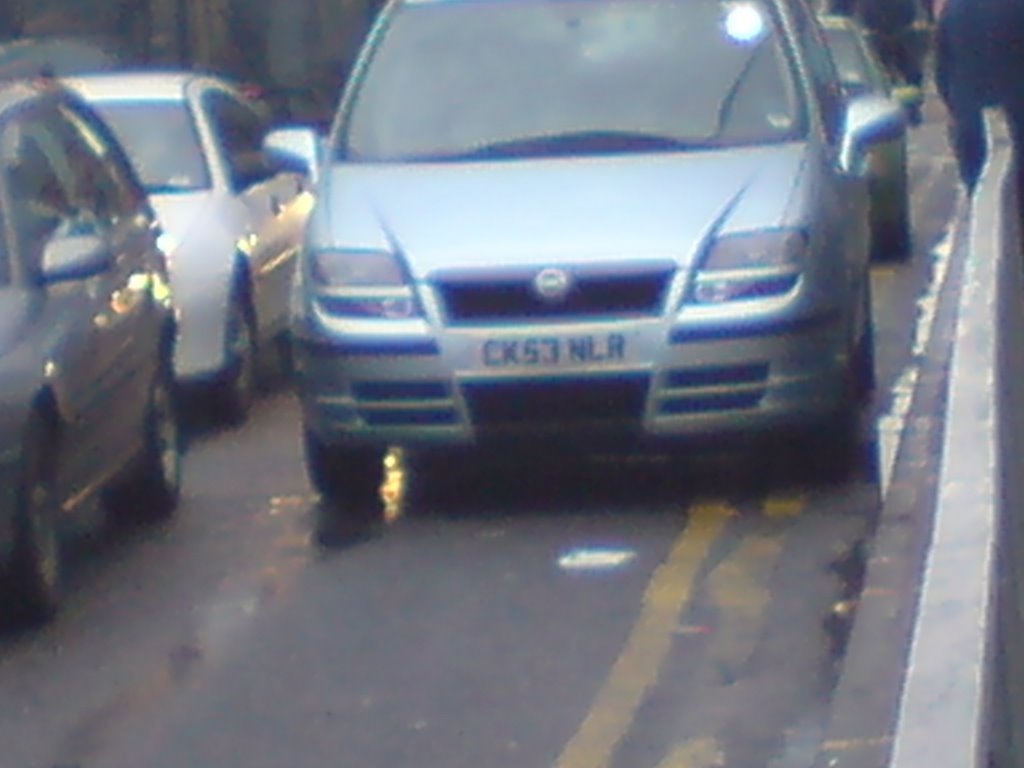
If every business parked an ugly van with advertising in mainly residential streets our environment would be dire. Then we have cars partly parked on the pavement in Whitchurch where they shouldn't be.

More Double Yellow line abuse in Whitchurch


Double yellow line abuse and pavement form hell


Not pretty sites in Cardiff city centre opposite the castle
What a mess the pavement is in and all that gum and rubbish -ugh!!

A report from the Pedestrians Association [July 1998] identifies that the number of injuries caused by
falls on poor quality pavements are likely to far exceed those caused to pedestrians by vehicles, yet these go unreported in official accident statistics. The Association also draws on the 1997 National Road Maintenance Condition Survey which shows pavement conditions to be worsening year on year.
Excluding NHS costs in treating fall victims, it also estimates that the cost of poor pavements could
total over £500m a year from legal and insurance costs and staff time dealing with claims.

Let me past! Pavement blockage!


Lest me past (2)

Sunday, November 26, 2006

Some action required Jayne and Adrian!


Dear Jayne and Adrian - Councillors for Rhiwbina

I would appreciate it if you would clarify your position re road narrowing at Heol Llanishen Fach - will it be easier for folk to cross the road if the road narrowing is removed? What is the exact issue here?

Please have a look at my blog and tell me what we can do about traffic congestion, lack of pedestrain crossings, badly maintained footpaths and where there are actually dropped kerbs they are not fit for purpose! Cycling is so dangerous that folk are cycling on the pacements but it is dangerous for pedestrians...........

Conwy to paint dog poo?

Conwy to paint dog poo to highlight foul problem 25/11/2006 - A campaign to encourage people to clear up after their dogs starts in Conwy on Monday 27th November. Cllr Janet Finch-Saunders, Conwy's Cabinet Member for Community Safety said, "By now, every dog owner in Conwy should...

Step up or get on your bike, Rhodri

First Minister Rhodri Morgan could be axed from a campaign to promote cycling in the city - unless he does more to promote greener transport.
Mr Morgan is honorary president of the Cardiff Cycling Campaign, but members say he has supported car users since coming to power.
In the campaign's annual meeting last night, the group voted unanimously to remove him - unless he influenced the Assembly's current consultation Welsh Transport Strategy to favour public transport, cycling and walking. Nov 23 2006 Katie Bodinger, South Wales Echo

Cyclists slam Cardiff Lib-Dems pro car policy

Cyclists slam Lib Dem green credentials 22/11/2006 - Ruling Lib-Dems on Cardiff Council have failed to control the car-promoting projects of planning and transport officers, despite claiming green credentials, it was claimed today. Dr Dyfed Wyn Huws, Chair of Cardiff Cy...

Road tolls prove a success in cities around the world

London’s congestion charge is probably the best-known in the world, but it has not been the most successful. That honour appears to go to Durham, a city in northern England noted for its cathedral and castle. Durham introduced a cordon-based pricing scheme in 2002, the first in the United Kingdom, and six months before London.Traffic has fallen by 90 per cent. In comparison, London's congestion charge has reduced its considerably higher traffic levels by about 20 per cent, and has led to a 29,000 rise in bus passengers going into the city centre during morning peak.

‘Congestion Charge’ Council Hailed as Country’s “Most Innovative”
The North East council which introduced the UK’s first road charge – has been voted the country’s Most Innovative Local Authority in a major national award scheme.

Saturday, November 25, 2006